
Pre-Transaction Due Diligence: Where Integrity Findings Change Deal Terms
Pre-transaction due diligence should test what the seller’s records may not reveal. Before deal terms harden, buyers need to verify who controls the target, check for disputes and regulatory action across relevant jurisdictions, and assess sanctions exposure and the reputation of key principals. A material finding may change the price, require a specific warranty or indemnity, become a condition of closing, or justify walking away.
Financial and legal reviews remain vital, but they may not connect a principal to an undisclosed company or find litigation filed abroad. Independent verification gives deal teams a clearer basis for deciding which risks can be priced, protected against or not accepted.
Rule Ltd prepares corporate intelligence and third-party due diligence reports through human analysts working across languages and jurisdictions. The firm’s reporting is designed to support defensible pre-transaction decisions for senior legal and compliance teams.
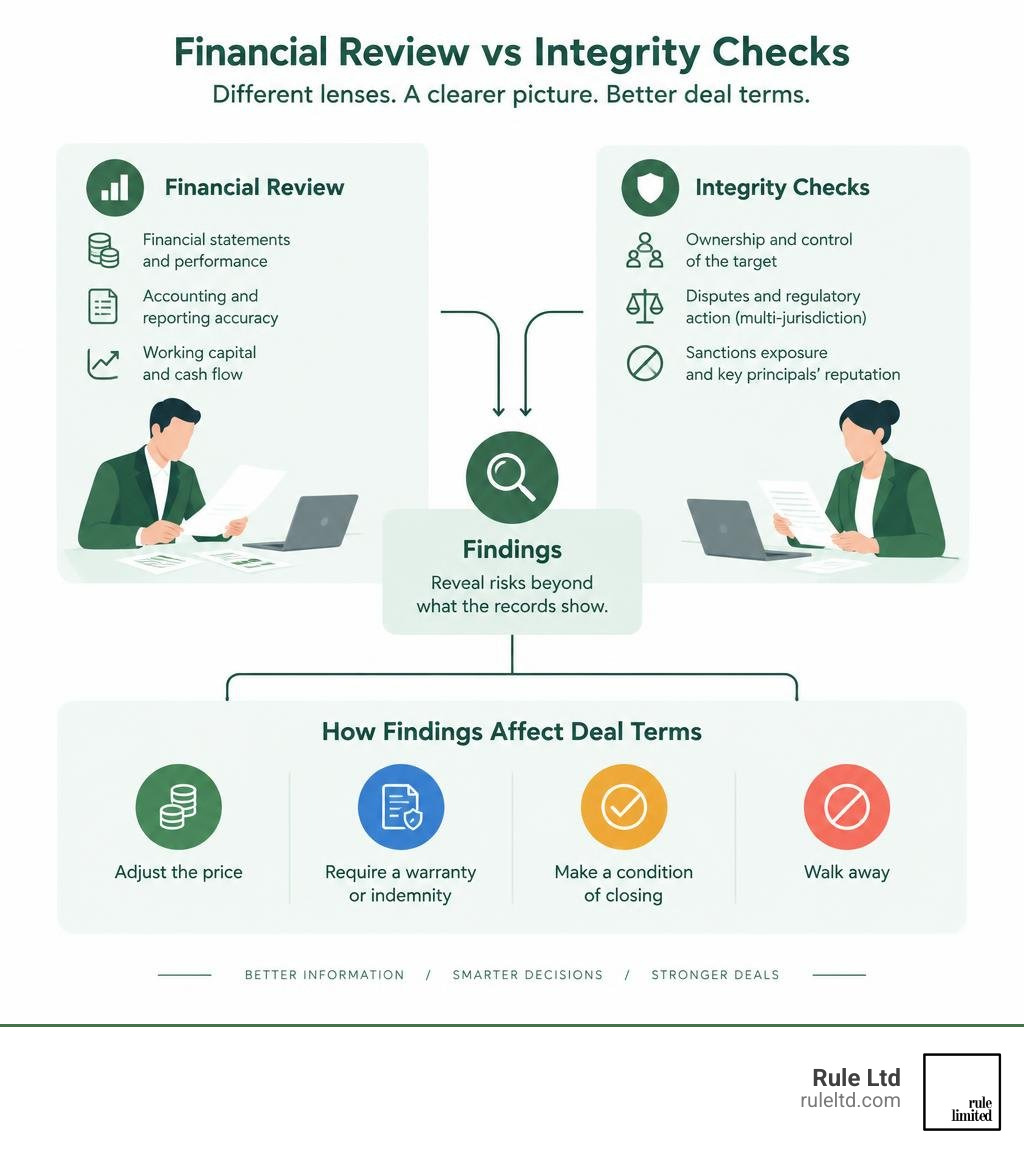
Critical dimensions of pre-transaction due diligence include:
- Comprehensive third party risk assessment
- Evaluating emerging compliance risk indicators
- Uncovering cross-border regulatory enforcement actions
The Core Blind Spots of Standard M&A Scrutiny
Empirical transaction data shows that 70–75% of acquisitions fail to create shareholder value, and nearly 60% of senior executives attribute failed transactions to fundamental diligence shortcomings. Standard transaction reviews typically concentrate on historical accounting ledgers, Quality of Earnings (QoE) calculations, and documents curated inside a virtual data room (VDR). While these steps evaluate reported performance, they rely on information selected by the seller.
This creates systemic blind spots. Standard audit procedures do not routinely surface concealed corporate affiliations, foreign regulatory actions, or beneficial ownership layers designed to obscure politically exposed persons (PEPs) or sanctioned entities. When evaluating complex cross-border acquisitions, transactional counsel and compliance heads require comprehensive mergers and acquisitions due diligence that tests representations against independent corporate registries, court records, and intelligence sources.
How Critical Pre-Transaction Due Diligence Alters Transaction Mechanics
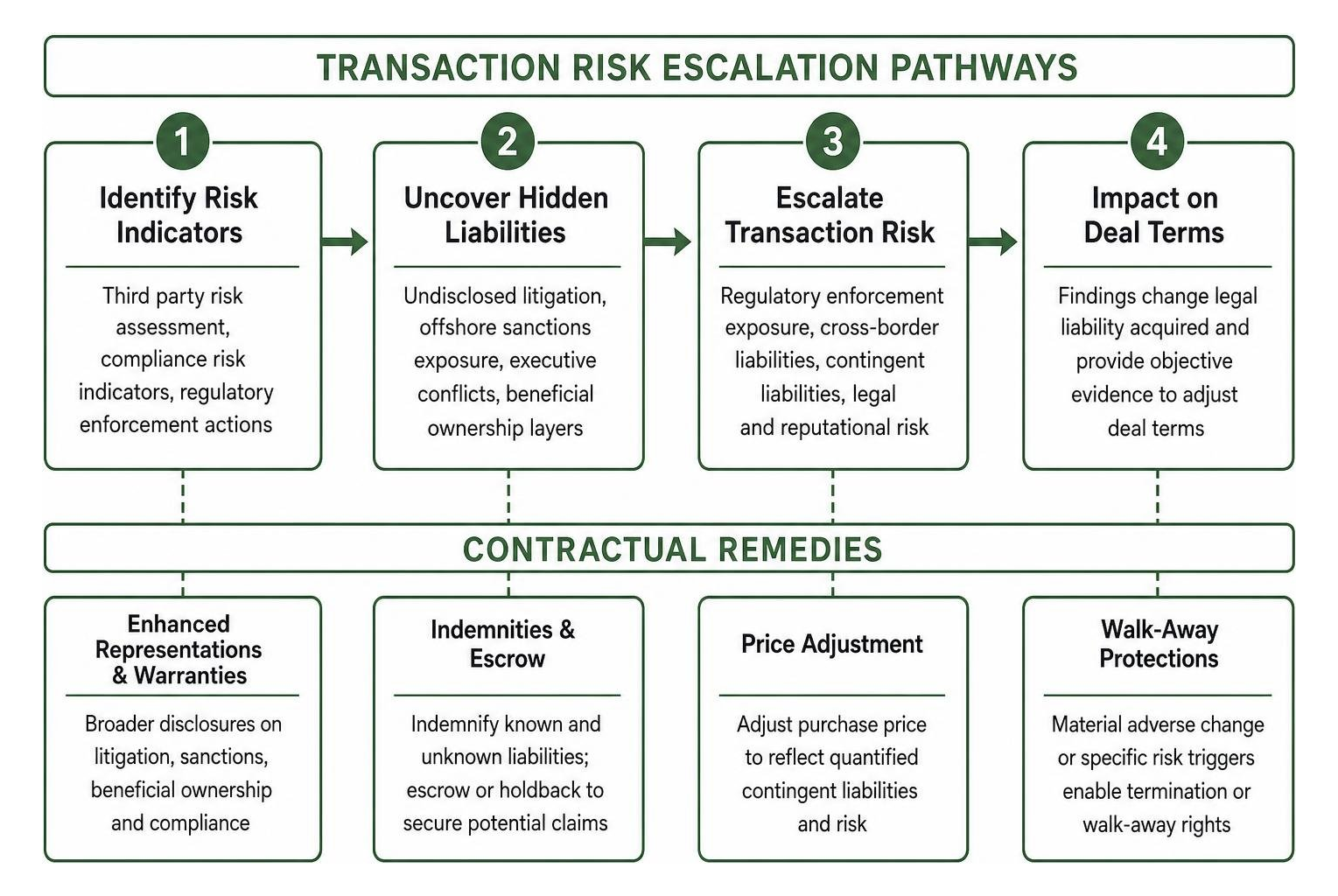
Integrity findings uncovered before closing provide dealmakers with objective evidence to restructure terms, adjust purchase prices, or invoke walk-away protections. Discovering regulatory enforcement exposure under the Foreign Corrupt Practices Act (FCPA), the UK Bribery Act, or EU sanctions frameworks changes the legal liability acquired in a share purchase.
Uncovering Hidden Cross-Border Liabilities and Foreign Litigation
In international transactions, litigation filed in offshore jurisdictions or secondary operating regions often goes undisclosed in initial data rooms. An acquisition target may present clean domestic court records while facing substantial regulatory enforcement, creditor claims, or winding-up petitions abroad.
A thorough purchaser due diligence framework requires rigorous multi-jurisdictional verification. Identifying these issues early enables transactional teams to conduct focused legal due diligence to quantify contingent liabilities before locking deal terms.
| Disclosure Category | Virtual Data Room Representation | Investigative Finding | Contractual Remedy |
|---|---|---|---|
| Cross-Border Litigation | Clean litigation certificate in primary domicile. | Undisclosed commercial claims in offshore subsidiary. | Specific indemnity and targeted escrow holdback. |
| Sanctions & Control | Minority shareholder holding 15% listed as passive. | Ultimate control exercised by an OFAC-listed entity. | Refusal to proceed or immediate transaction restructuring. |
| Commercial Integrity | High margins attributed to superior product offering. | Critical public tenders secured via illicit intermediaries. | Re-trading purchase price and uncapped indemnity protection. |
Executive Reputational Risk and Undisclosed Conflicts
Deal teams frequently assess executive leadership based solely on self-reported biographies. However, corporate intelligence investigations routinely uncover undisclosed commercial interests, past corporate insolvencies, and direct links to suppliers.

Carrying out an independent reputation risk assessment reveals historical disqualifications, regulatory actions, and integrity concerns that could damage enterprise value. Similarly, systematic conflict of interest screening identifies non-arm’s-length supply arrangements and self-dealing before agreements become legally binding.
Impact on Valuation, Warranties, and Contractual Protections
When pre-transaction diligence reveals integrity issues, deal teams can translate those risks into clear contractual terms. Depending on the severity of the findings, purchasers can recalibrate valuations or adjust the definitive transaction structure:
- Purchase Price Reductions: Adjusting baseline EBITDA downwards to remove revenue derived from related-party transactions or unverified intermediary arrangements.
- Specific Indemnities and Special Escrows: Ring-fencing known foreign litigation or regulatory exposure outside standard liability caps and de minimis thresholds.
- Closing Conditions and Termination Rights: Establishing clear pre-closing remediation requirements or exercising walk-away rights under material adverse change provisions.
- Representation and Warranty Insurance Exclusions: Structuring custom indemnification mechanisms when underwriting insurers exclude identified cross-border risks.
Integrating Investigative Intelligence into Pre-Transaction Due Diligence
Transactional counsel who utilise investigative intelligence gain an information advantage during negotiations. Reviewing the key findings in a due diligence report allows buyers to verify vendor claims through independent registry data, asset searches, and local regulatory inquiries. Applying enhanced due diligence across opaque jurisdictions protects buyers against undisclosed liabilities.
Vendor Due Diligence vs. Purchaser Scrutiny
Vendor Due Diligence (VDD) reports commissioned by sellers can streamline transaction timelines in competitive auctions. However, institutional buyers must evaluate these reports carefully. Sellers may frame potential liabilities favourably or include strict non-reliance conditions.
Evaluating third-party reports alongside independent vendor due diligence considerations helps purchasers identify unvetted vendor dependencies and verify whether key commercial agreements require change-of-control consents. Purchasers often conduct parallel third-party due diligence to cross-examine critical claims.
Execution Models: From Preliminary Review to Deep Forensic Diligence
Due diligence is most effective when conducted in structured phases. This allows deal teams to allocate resources prudently, screening targets early and reserving deep forensic investigations for transactions that progress.
Confirmatory vs. Preliminary Pre-Transaction Due Diligence
Preliminary (pre-LOI) diligence evaluates whether an acquisition aligns with the core investment thesis before committing significant capital. Confirmatory (post-LOI) diligence takes place under exclusivity, using open-source intelligence, regulatory archives, and in-country records to test representations forensically.
In lower-middle-market acquisitions and search fund investments, target entities often rely on cash-basis accounting and maintain less formal governance structures. As outlined in research examining search fund due diligence dynamics, buyers must establish strict proof-of-cash controls while understanding what corporate due diligence is and when you need it.
Multi-Jurisdictional Intelligence and Analyst-Led Verification
Automated databases often generate high false-positive rates or miss records held in foreign-language registries. Relying entirely on automated screening tools can leave cross-border corporate structures unverified.
Independent investigations conducted by human analysts resolve entity ambiguities, interpret local filings, and assess local operating environments. Rule Ltd provides defensible intelligence across multiple languages and jurisdictions, allowing deal teams to assess risks accurately. Senior compliance teams use tailored corporate intelligence and structured risk profiling and reporting to protect capital across complex cross-border transactions.
Frequently Asked Questions about Pre-Transaction Due Diligence
Why does standard financial vetting miss integrity risks that alter deal value?
Standard financial vetting concentrates on presented historical statements, Quality of Earnings metrics, and data room documents. It is not designed to surface undisclosed litigation in secondary jurisdictions, off-balance-sheet commitments, regulatory enforcement exposure abroad, or hidden conflicts involving key principals. Those omissions are precisely the findings that later force purchase price adjustments, specific indemnities, or termination.
How do integrity findings translate into M&A purchase agreement mechanics?
Integrity findings provide the evidential basis for renegotiating baseline valuations, demanding targeted price reductions, or structuring specific indemnities for known legal risks. Where significant exposure is identified, buyers can establish dedicated escrow holdbacks, introduce custom closing conditions, or exercise walk-away rights under material adverse change provisions.
What distinguishes preliminary pre-LOI screening from confirmatory due diligence?
Preliminary screening before a Letter of Intent tests the investment thesis, identifies major sanctions or regulatory issues, and informs initial valuation. Confirmatory due diligence under exclusivity involves forensic investigation of corporate structures, commercial relationships, and public records across all operating jurisdictions, with findings tied to contractual remedies.
How does cross-border corporate intelligence surface risks in foreign subsidiaries?
Cross-border corporate intelligence relies on local-language capabilities, primary corporate registry checks, offshore court record retrieval, and regulatory searches across each operating jurisdiction. The process maps complex ultimate beneficial ownership structures, confirms asset ownership, and identifies regulatory enforcement actions that do not appear in primary holding company filings.
Conclusion
Conducting effective pre-transaction diligence requires looking beyond self-reported disclosures to examine cross-border corporate structures, offshore litigation, and counterparty integrity. When transactional counsel and compliance executives substantiate risks early, they can adjust purchase prices, negotiate specific indemnities, or walk away from unviable deals.
Defensible corporate due diligence combines multi-jurisdictional reach with analyst-led scrutiny to reduce false positives and surface material exposure before capital is committed.
This article does not constitute legal advice. Specific matters must be assessed on a case-by-case basis by qualified counsel.
Sources Relied On
- Financial Action Task Force (FATF) Guidance on Beneficial Ownership and Transparency
- US Department of the Treasury, Office of Foreign Assets Control (OFAC) 50% Rule Guidance
- UK Office of Financial Sanctions Implementation (OFSI) Ownership and Control Framework
- UK Bribery Act 2010 & US Foreign Corrupt Practices Act (FCPA) Enforcement Statues
- UK Economic Crime and Corporate Transparency Act 2023 (ECCTA) Guidance
- Yale School of Management, Search Fund Due Diligence Research Papers