
Unresolved Beneficial Ownership and Latency Gaps Represent Actionable Supervisory Vulnerabilities
For General Counsel and Chief Compliance Officers, compliance risk indicators serve a single defensible purpose: establishing whether operational evidence demonstrates effective control or exposes latent liability. Supervisory enforcement across international jurisdictions focuses squarely on unverified ownership chains, sanctions screening latency, unvetted intermediary remuneration structures and aged internal audit exceptions. When metric counts rise without triggering investigative intervention and senior legal escalation, supervisory authorities treat the resulting record as affirmative proof of institutional willful blindness.
Regulators assess whether an enterprise detects control decay internally and executes immediate remediation before statutory thresholds are breached.[1] The forensic age, root cause and evidential certainty of an open finding dictate regulatory culpability far more than gross violation counts.
Source
[1] National Credit Union Administration, Evaluating Compliance Risk: Updated Compliance Risk Indicators.
I am Judy Lee, founder of Rule Ltd and former General Counsel and head of legal and compliance in EMEA. My practice in cross-border corporate intelligence and third-party due diligence focuses on evidentiary proof: establishing what registry and field evidence confirms, isolating unresolved control opacity, and defining mandatory escalation triggers for executive leadership. This article does not constitute legal advice; specific cross-border matters require tailored legal assessment.
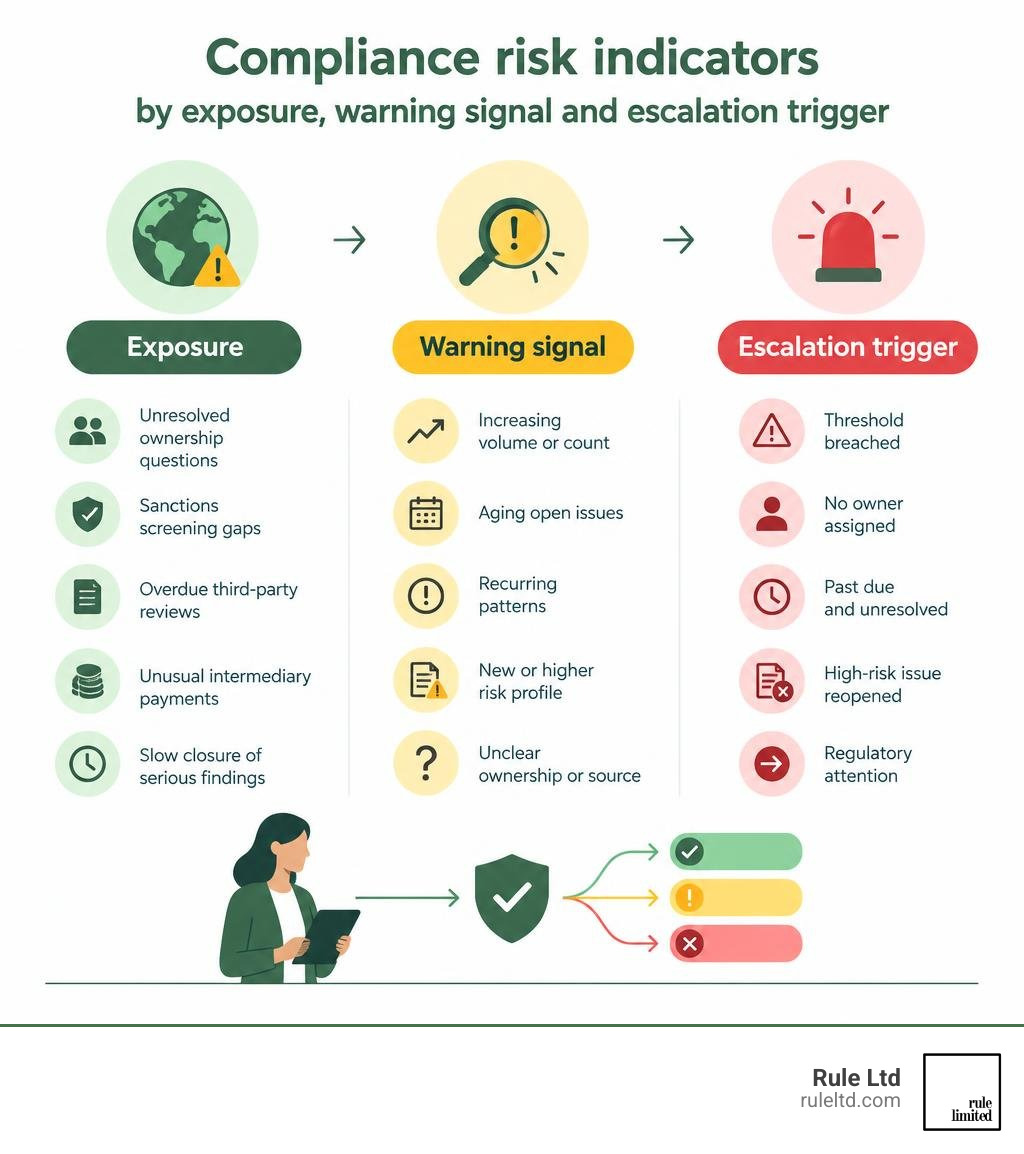
Unmonitored Transaction Latency and Intermediary Anomalies Drive Cross-Border Supervisory Exposure
An unresolved ownership chain is not made less material by high transaction volumes or a mature compliance programme. The relevant question is whether the organisation can evidence who ultimately controls the counterparty, how that conclusion was reached, and what changed after the initial review. Where those points cannot be evidenced, the exception should be treated as an open finding with consequences for sanctions, fraud, corruption, and third-party risk decisions.
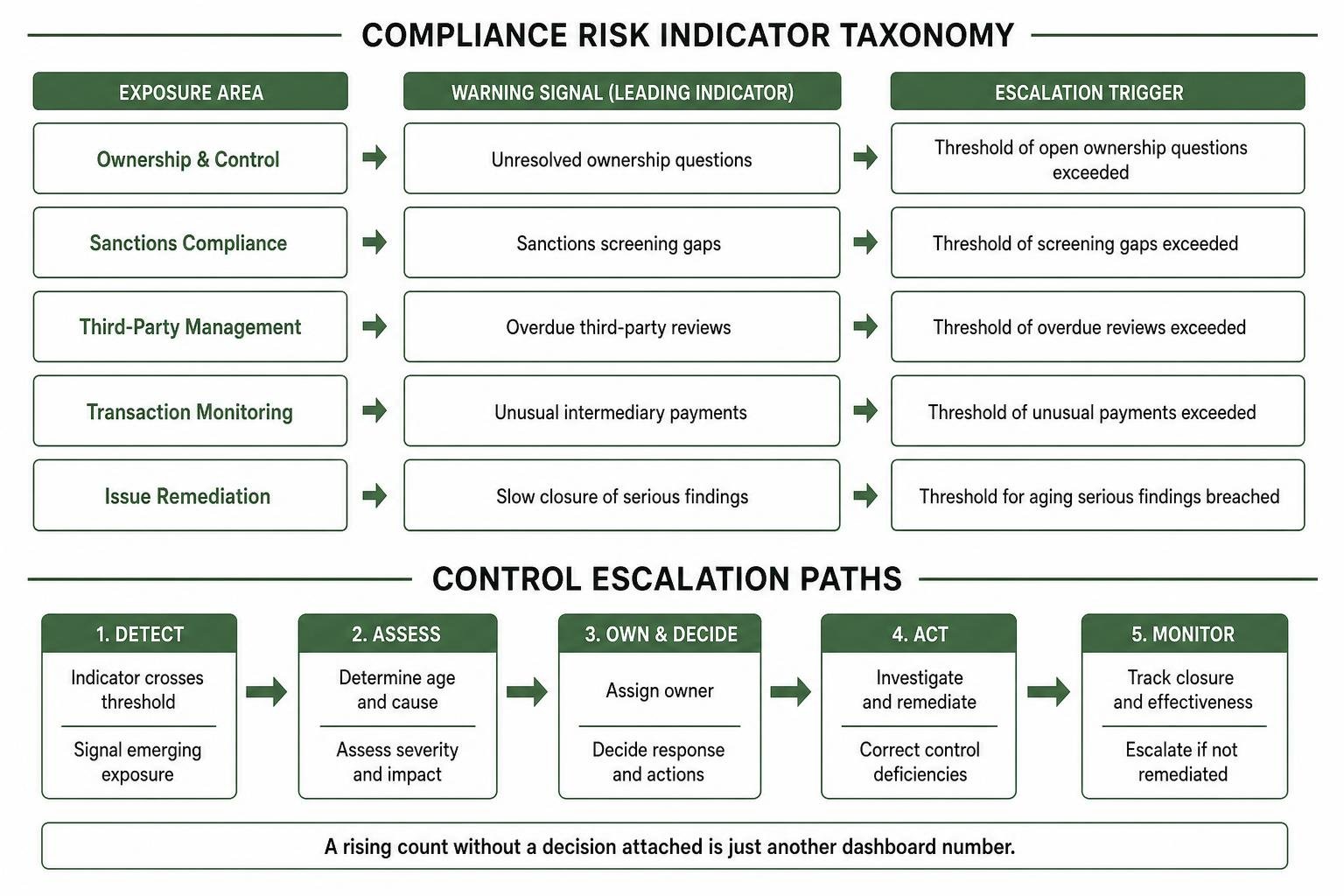
Evidentiary Gaps in Financial Crime and Sanctions Architectures
Regulatory enforcement rarely hinges on a single missed filing; instead, enforcement bodies penalise the structural failure to connect multi-jurisdictional data points. Operational metrics such as SAR filing latency and screening refresh delays indicate whether internal controls function in real time or merely document historical failures. When registry filings reveal layered corporate vehicles, trust arrangements, or nominee directors, relying on static database verification exposes organisations to acute enforcement risk. In such cases, executing a comprehensive ultimate beneficial owner check is essential to establish true control.
Sanctions evasions increasingly exploit corporate structuring immediately below statutory thresholds. Standard compliance screening frequently fails to aggregate disparate minority stakes held by blocked parties across complex multinational holding structures. Legal teams conducting an OFAC sanctions list search must actively evaluate the 50 percent rule to identify aggregated blocked ownership before capital movements take place. Proactive sanctions risk management requires continuous scrutiny of rapid equity transfers and corporate restructuring designed to circumvent ownership-and-control thresholds.
Intermediary Structuring and High-Risk Commercial Corridors
Enforcement actions under the Foreign Corrupt Practices Act (FCPA) and the UK Bribery Act 2010 consistently show that corrupt payments flow through non-standard intermediary arrangements. In cross-border distribution channels, critical risk indicators include success fee structures detached from commercial market norms, offshore payments to third-party accounts, and commercial distribution contracts executed without completed third-party due diligence.
When commercial pressure prompts business units to accelerate onboarding, governance frameworks must resist informal bypasses of PEP identification and classification protocols. In emerging markets and state-adjacent procurement environments, uncovering undisclosed state ownership or political entanglements demands commissioned enhanced due diligence for high-risk entities to verify commercial substance and reputational integrity. A defensible programme integrates these evidentiary findings within comprehensive ABAC due diligence compliance standards rather than relying on vendor warranties.
Privacy Liability and Data Governance Vulnerabilities
Under cross-border privacy and consumer frameworks, including EU GDPR, the UK Data Protection Act 2018, and state-level consumer statutes, unmonitored vendor integrations create direct regulatory exposure. Data Subject Access Request backlogs, processing arrangements lacking enforceable Data Processing Agreements, and consumer complaint spikes across specific product lines represent systemic governance deficiencies. Furthermore, unresolved technical vulnerabilities discovered during a third-party cybersecurity risk assessment that remain unmitigated past risk tolerance windows serve as primary evidence of gross negligence in supervisory enforcement proceedings.
An Unresolved Ownership Chain Is an Evidential Finding, Not an Alert-Management Problem
Where a counterparty’s beneficial ownership cannot be corroborated, the central issue is not the number of alerts generated or the elapsed review time. It is whether the file contains a defensible account of control: the registry and corporate records reviewed, inconsistencies identified, inquiries made, and the rationale for accepting, restricting, or declining the relationship.

When an Ownership Exception Warrants Escalation
An ownership exception becomes material when the evidence does not support the stated control position, not merely when a screening workflow exceeds an internal service target. Indicators include conflicting registry data, unexplained nominee or trust arrangements, rapid transfers before onboarding, a gap between declared and evidenced control, or an inability to identify the person exercising practical influence.
The escalation record should preserve the competing explanations and the evidence supporting or weakening each one. A senior decision-maker can then determine whether the relationship may proceed subject to conditions, requires enhanced investigation, or should be declined. That is a legal and commercial judgement, not a mechanical threshold exercise.
What a Defensible Ownership Record Shows
A defensible file makes clear what was known at the decision date, what remains uncertain, and which uncertainty is acceptable in light of the relationship, jurisdiction, and exposure. It should also identify ownership questions that could affect sanctions analysis, intermediary integrity, or the reliability of representations made by the counterparty.
The NCUA’s risk-focused compliance material supports an approach that connects identified risk indicators with documented oversight and a proportionate response, rather than treating indicators as a stand-alone score.[1]
Source
[1] National Credit Union Administration, Evaluating Compliance Risk: Updated Compliance Risk Indicators.
A Changing Enforcement Context Does Not Cure an Unresolved Ownership Finding
Regulatory priorities and enforcement activity may change across jurisdictions, but they do not reduce the need for a defensible ownership conclusion. For General Counsel and Chief Compliance Officers, the practical issue is whether an unresolved ownership question has been recorded as a discrete risk decision or allowed to disappear within routine onboarding, screening, or procurement activity.

Policy Changes Alter Exposure, Not Evidential Standards
Changes in federal or state enforcement priorities can alter the agencies most likely to scrutinise a relationship and the legal theories that may be applied. They do not resolve discrepancies in ownership evidence. Where consumer, sanctions, corruption, or fraud exposure may overlap, the file should show why the ownership analysis was sufficient for the risks actually presented.
Supply-Chain Exposure Often Begins With an Unresolved Control Question
A multi-tier supply chain can obscure who benefits from, directs, or can influence a vendor relationship. The material finding is not that the chain is complex; it is that available records do not establish control to a standard that supports the proposed commercial decision. In those circumstances, targeted vendor compliance monitoring should test whether subsequent changes in ownership, management, or payment arrangements increase the significance of the unresolved issue.
Evidentiary Synthesis and Human-Led Forensic Analysis in Board Governance
The Audit and Risk Committee requires clear risk trajectories derived from aggregated intelligence rather than unfiltered operational logs that obscure systemic exposure.
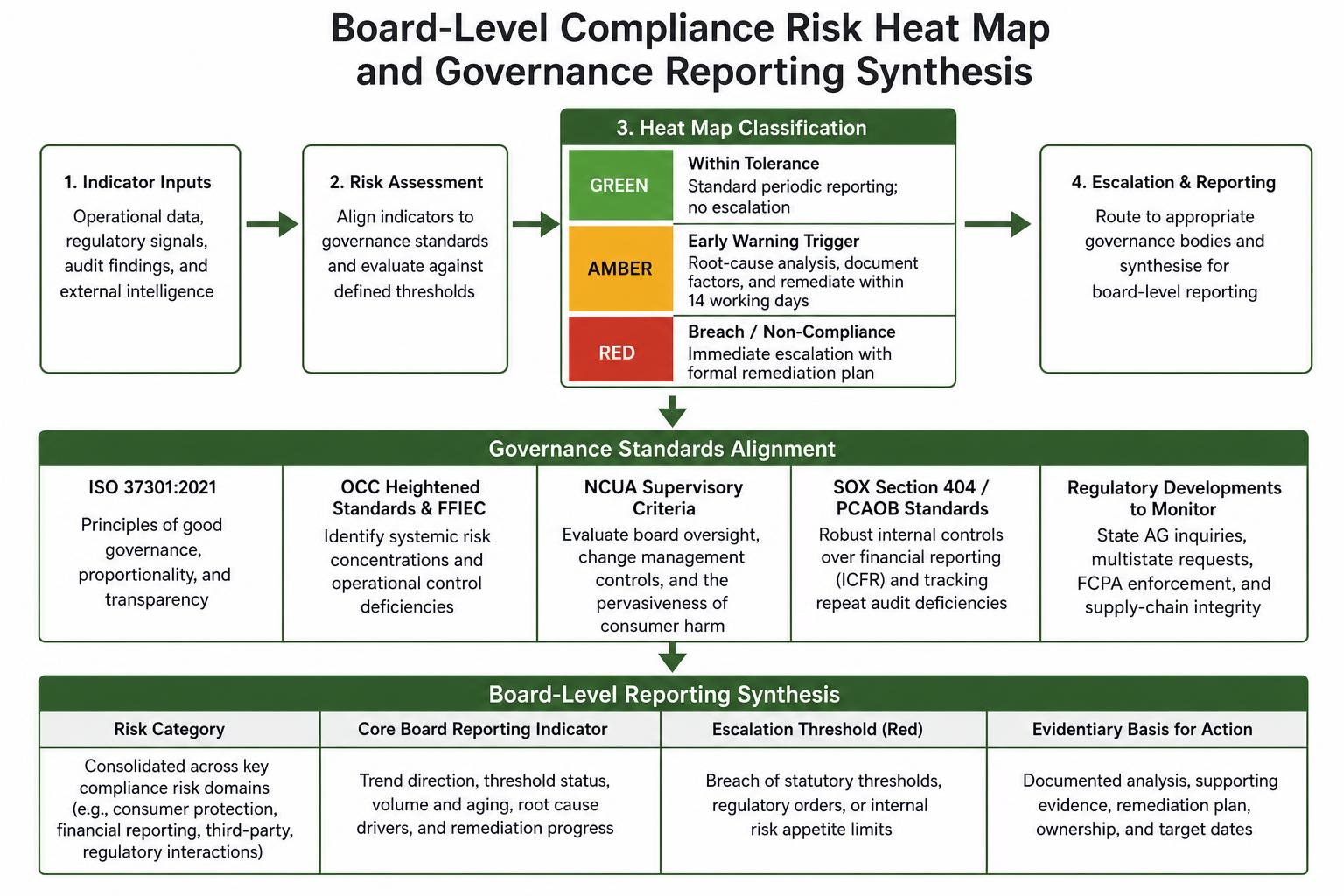
Synthesis of Ownership Evidence and Enforcement Exposure
Executive reporting must synthesise operational metrics into distinct legal and supervisory risk categories. Across financial crime portfolios, high-risk counterparty KYC backlogs indicate unmonitored exposure to sanctions updates and PEP status changes. In anti-corruption oversight, the presence of active intermediaries operating without complete enhanced due diligence establishes immediate vicarious liability under the FCPA and the UK Bribery Act 2010. Similarly, unaddressed vendor data vulnerabilities and aged whistleblower investigations signal acute cultural, fraud, and litigation liabilities.
Whistleblower reporting patterns and investigation cycle times offer critical indicators of corporate culture and control effectiveness. Tracking hotline trends alongside regular conflict of interest screening prevents governance failures involving undisclosed executive relationships, self-dealing, or procurement fraud.
Investigative Limitations of Automated Ingestion Engines
Automated screening engines ingest high-volume feeds across enterprise resource planning systems and global databases. While effective for initial name matching, automated architectures regularly misinterpret complex corporate registries, layered holding vehicles, trust instruments, and offshore nominee networks.
Defensible corporate oversight requires coupling automated alerts with human-led corporate intelligence. When an indicator reveals ownership opacity or adverse media associations, experienced human analysts examine multi-jurisdictional filings, verify asset ownership, and uncover hidden beneficial control to produce actionable, decision-grade corporate intelligence.
Operational Velocity Does Not Reduce an Unresolved Ownership Finding
The Finding Must Remain Visible to Decision-Makers
A high-volume onboarding or payment environment can make unresolved ownership issues appear routine. That is precisely why the exception should remain visible as a distinct evidential finding, with a named owner, an explanation of the unresolved point, and a recorded decision about whether commercial activity can continue.
Throughput Is Not Evidence of Control
Operational teams may complete reviews quickly while uncertainty about beneficial control, sanctions exposure, or intermediary influence remains unresolved. Processing speed does not answer whether the organisation can explain who controls the counterparty and why the available evidence supports that conclusion.
Cross-Border Divergence Raises the Stakes of an Incomplete File
Differences in registry quality, disclosure rules, and enforcement priorities can complicate an ownership assessment. They do not justify treating uncertainty as closed. A defensible decision distinguishes verified control facts from assumptions and records the conditions under which the matter must be revisited.
Conclusion
A well-calibrated monitoring programme enables General Counsel and Chief Compliance Officers to identify and remediate control vulnerabilities long before they attract regulatory intervention. Defensible governance requires clear thresholds, assigned ownership, and human-led investigative depth to evaluate complex risk signals.
Rule Ltd supports legal and compliance teams worldwide through independent, human-led corporate intelligence, reputational analysis, and third-party risk investigations. We provide fixed-price, cost-certain reports with fast turnaround times, completing initial screening reports in two to three working days and enhanced due diligence investigations in approximately five working days, with every engagement quoted as a fixed price before work begins.
To evaluate your vendor and counterparty risk framework, conduct a structured third-party risk assessment with our team.
This article is provided for informational purposes only and does not constitute legal advice. Specific legal, regulatory, or compliance matters must be assessed on a case-by-case basis with qualified counsel.
Sources
[1] National Credit Union Administration (NCUA), Evaluating Compliance Risk: Updated Compliance Risk Indicators, Supervisory Letter 17-01.
[2] U.S. Department of Justice (DOJ), Evaluation of Corporate Compliance Programs, Criminal Division Guidance.
[3] U.S. Department of the Treasury, Office of Foreign Assets Control (OFAC), A Framework for OFAC Compliance Commitments and 50 Percent Rule Guidance.
[4] Association of Certified Fraud Examiners (ACFE), Occupational Fraud 2024: A Report to the Nations.
[5] International Organization for Standardization, ISO 37301:2021 Compliance management systems — Requirements with guidance for use.
[6] Public Company Accounting Oversight Board (PCAOB), Spotlight: Staff Update on 2022 and 2023 Inspection Observations of Internal Control Over Financial Reporting (ICFR).